
Beginner Guides
Are Paint by Numbers Hard? Beginner vs Advanced, Honestly (2026)
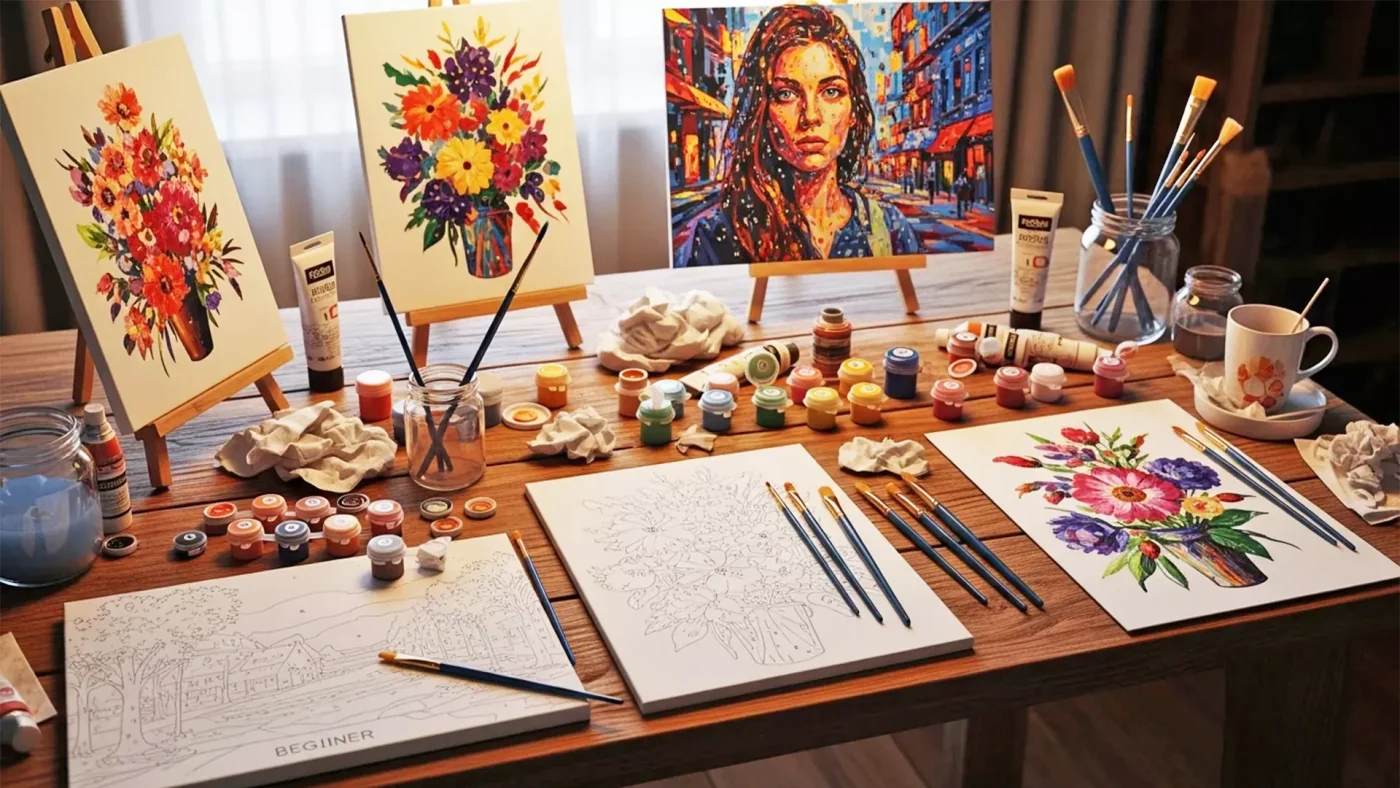
Here’s the honest answer: no, paint by numbers isn’t hard. It’s designed so that anyone can do it — the tricky decisions of composition, colour and proportion are already made for you, and every mistake is fixable. But “not hard” doesn’t mean “all the same.” Difficulty scales, and knowing what makes one kit a relaxing evening and another a rewarding challenge is the secret to choosing a canvas you’ll actually finish. Let’s break it down.
The honest answer
You don’t need a steady hand, an artist’s eye, or any experience at all. The canvas tells you exactly which colour goes where, and because it’s acrylic, anything you get wrong can be painted straight back over once it dries. The “skill” is really just patience and a little brush care — both of which you pick up within the first hour. So if you’ve been worried you’re “not artistic enough,” set that worry down. You are.
What varies is how involved a kit is. A design with big, simple areas is a gentle wind-down; one with lots of tiny, closely-shaded regions is more absorbing and takes longer. Neither is harder to do — one just asks more of your time and attention.
What makes a kit easy or hard
Four things decide where a kit sits on the difficulty scale:
- Colour count. The single biggest factor. A 24-colour kit has fewer, broader shades and larger regions — easy and quick. A 48-colour kit has subtle, closely-related tones packed into smaller areas — more detailed and slower. 36 sits comfortably in between.
- Canvas size. Counter-intuitively, bigger is often easier. A larger canvas spreads the same design over more space, so each region is roomier and kinder to the brush. Small canvases cram detail into tight spaces.
- Area size. Big open shapes — skies, walls, water — fill fast and forgive. Lots of little slivers (foliage, jewellery, individual strands) take patience and a fine brush.
- Subject. Landscapes, florals and simple scenes are the friendliest. Detailed cityscapes, animals and especially human faces sit at the top end because likeness depends on fine, precise shading.
Difficulty levels at a glance
A quick map from “first ever kit” to “confident hobbyist”:
| Level | Colours | Canvas | Who it’s for |
|---|---|---|---|
| Easy | 24 | Larger, roomy areas | Total beginners, kids with help, a relaxed wind-down |
| Intermediate | 36 | Medium to large | Anyone comfortable after a first kit; more detail, still forgiving |
| Advanced | 48 | Larger to fit fine detail | Confident hobbyists; portraits, pets, detailed scenes |
Not sure what size to get? Bigger is usually easier to paint, not harder — the areas are more generous. Our size guide shows real dimensions so you can match the canvas to your subject and comfort level.
How to pick your level
If this is your first kit, don’t overthink it — start easy and enjoy the win. A 24-colour design on a generous canvas builds confidence fast, and you’ll finish it feeling capable rather than daunted. Our easy paint by numbers collection is built exactly for this: fewer colours, larger areas, friendly subjects.
Already painted one or two and want more to sink into? Step up to a 36- or 48-colour design from our paint by numbers for adults range. And if you’re wondering how much of an evening (or a few weeks) a kit will ask of you, our how long does paint by numbers take guide breaks the timings down by size and detail.
Progressing from beginner to advanced
The lovely thing about this hobby is that you improve just by doing it. A natural path looks like this:
- Start with an easy 24-colour landscape or floral. Learn brush control, edging and coverage on forgiving shapes.
- Move to a 36-colour scene. More regions, subtler shifts in tone — you’ll notice your edges getting cleaner.
- Try blending on a 48-colour design. Softening where two shades meet is what makes advanced pieces look painterly rather than “painted by number.”
- Take on a portrait or a pet. The top of the ladder — and by now you’ll have the patience and the touch for it.
None of these is genuinely “difficult” once you’ve built up to it. Each just rewards the skills the last one taught you.
Why faces and portraits are “advanced”
Faces are the one subject we always flag. The reason is simple: a human face reads as “right” or “wrong” to our eyes over the tiniest differences in shading. Get a sky slightly off and no one notices; get the shadow under an eye slightly off and it stops looking like the person. That’s why faces and pets need a higher colour count — 36 to 48 — so there are enough tones to capture a true likeness.
This matters most for custom paint by numbers from a photo. When you send us a portrait, we build it at the right detail level, and — because we want it to genuinely look like your person or pet — we send you a proof with free revisions before we print, and back it with a re-do guarantee. You’ll never be left painting a likeness that isn’t quite there.
So: are paint by numbers hard? No. Do they scale from a gentle evening to a proper, absorbing project? Absolutely — and that’s exactly why the hobby stays rewarding long after your first canvas. Pick a level that fits where you are today, and let the next one stretch you a little.
Pick the perfect first canvas
Start easy and finish proud — or send us a photo and we’ll build it at the right detail level, with a proof you approve before we print.
Browse Easy Kits